Tree & Shrub Care in Fort Worth: We Find the Cause and Bring Your Landscape Back to Life
Browning oak leaves. Fading hedges. A tree that just isn’t itself anymore. Before you assume the worst, get a real answer. North Texas Plant Health Care works exclusively with ISA Certified Arborists who treat trees and shrubs to save them — and only refer out for removal on the rare tree that’s truly gone beyond saving.
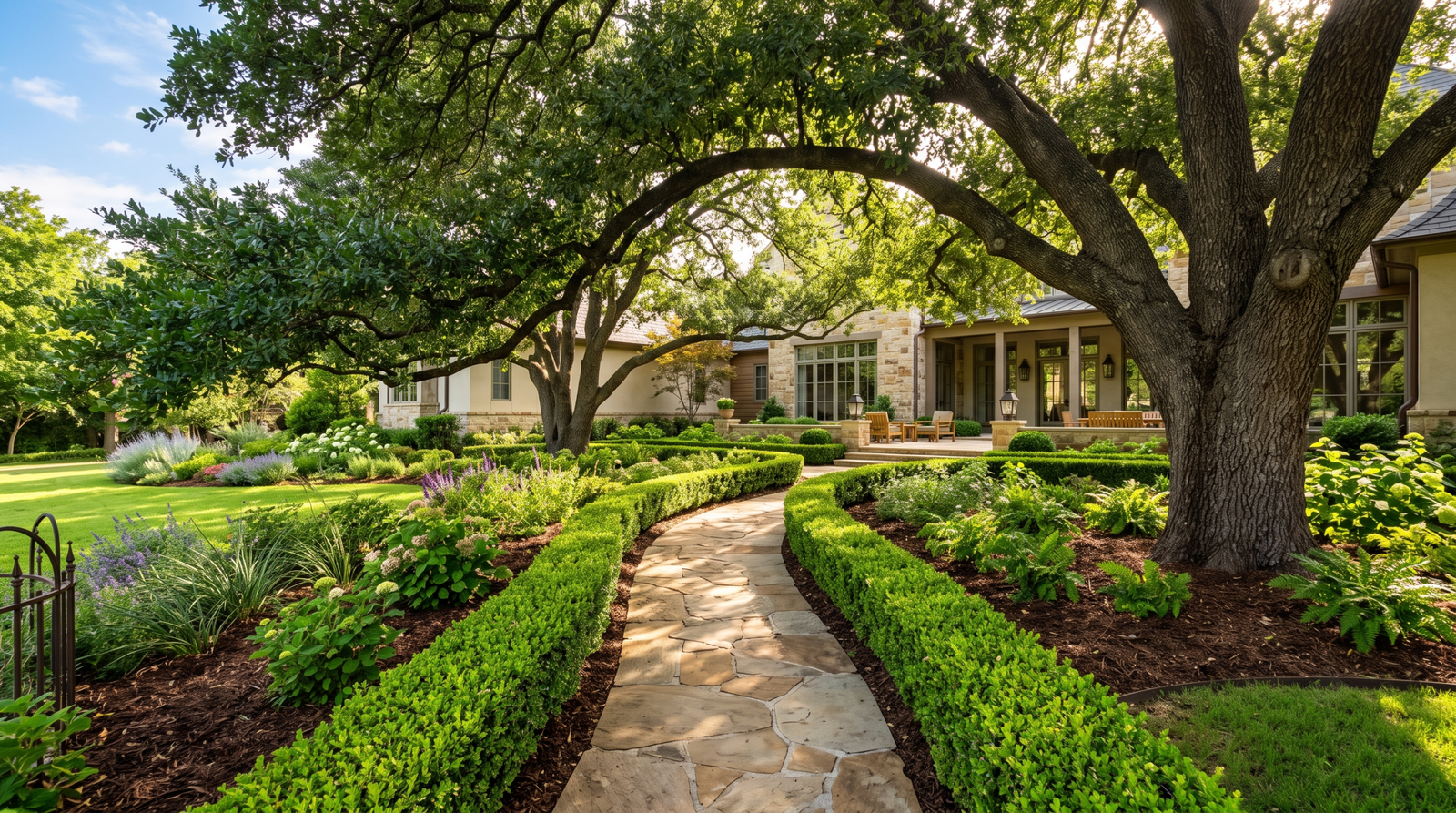
Dedicated Tree & Shrub Doctors
Free, In-Person Evaluations — No Cost Unless You Move Forward
Serving Fort Worth, Arlington, Mansfield, Burleson, Southlake, Colleyville, Keller, Trophy Club, Aledo, and surrounding Tarrant County communities.
Is Something Wrong With Your Tree or Bush?
Here's What It Might Mean.
Most of what we see is treatable — if it’s caught in time. Here’s what your landscape might be telling you.
Early Leaf Drop or a Wilting Canopy
- Likely means: Oak Wilt — one of North Texas's fastest-spreading tree diseases. It can jump tree to tree through shared roots.
- How we help: Early treatment isolates the infection and protects the rest of your canopy. This is the one where waiting costs you the most.
Bark Peeling in Sheets
- Likely means: Hypoxylon Canker, taking hold in a tree already stressed by heat or compacted roots.
- How we help: We check how far it's progressed. Most cases can still be stabilized.
Scorched, Crispy Leaf Edges
- Likely means: Bacterial Leaf Scorch, spread by small insects that slowly cut off water flow — usually a little worse each year.
- How we help: Annual treatment keeps it in check and protects your canopy's fullness.
Yellowing Boxwoods, Azaleas & Hedges
- Likely means: Iron Chlorosis — common in North Texas's alkaline clay, which locks nutrients away from the roots
- How we help: We feed the roots directly. Most shrubs show real color again within one growing season.
White, Waxy Film on Crepe Myrtle Bark
- Likely means: Crepe Myrtle Bark Scale — an increasingly common North Texas pest, often paired with black sooty mold.
- How we help: Targeted treatment controls it before it spreads through the rest of your landscape.
Freeze-Damaged Palm
- Likely means: Not necessarily dead. Cold-hardy palms often survive a hard freeze even when every visible frond has turned brown and collapsed, as long as the growing point deep in the trunk wasn't killed.
- How we help: We check the crown and give you a real answer before you remove an expensive statement palm that could still recover. More on freeze-damaged palms →
Just Looks "Off"
- Likely means: Usually stress from compacted clay, drought, or a tree that's never had a real checkup.
- How we help: One visit tells us exactly what it needs — not a guess.
Want more detail on a specific symptom? Browse our full Symptom Guide, organized by leaves, bark, and structure.
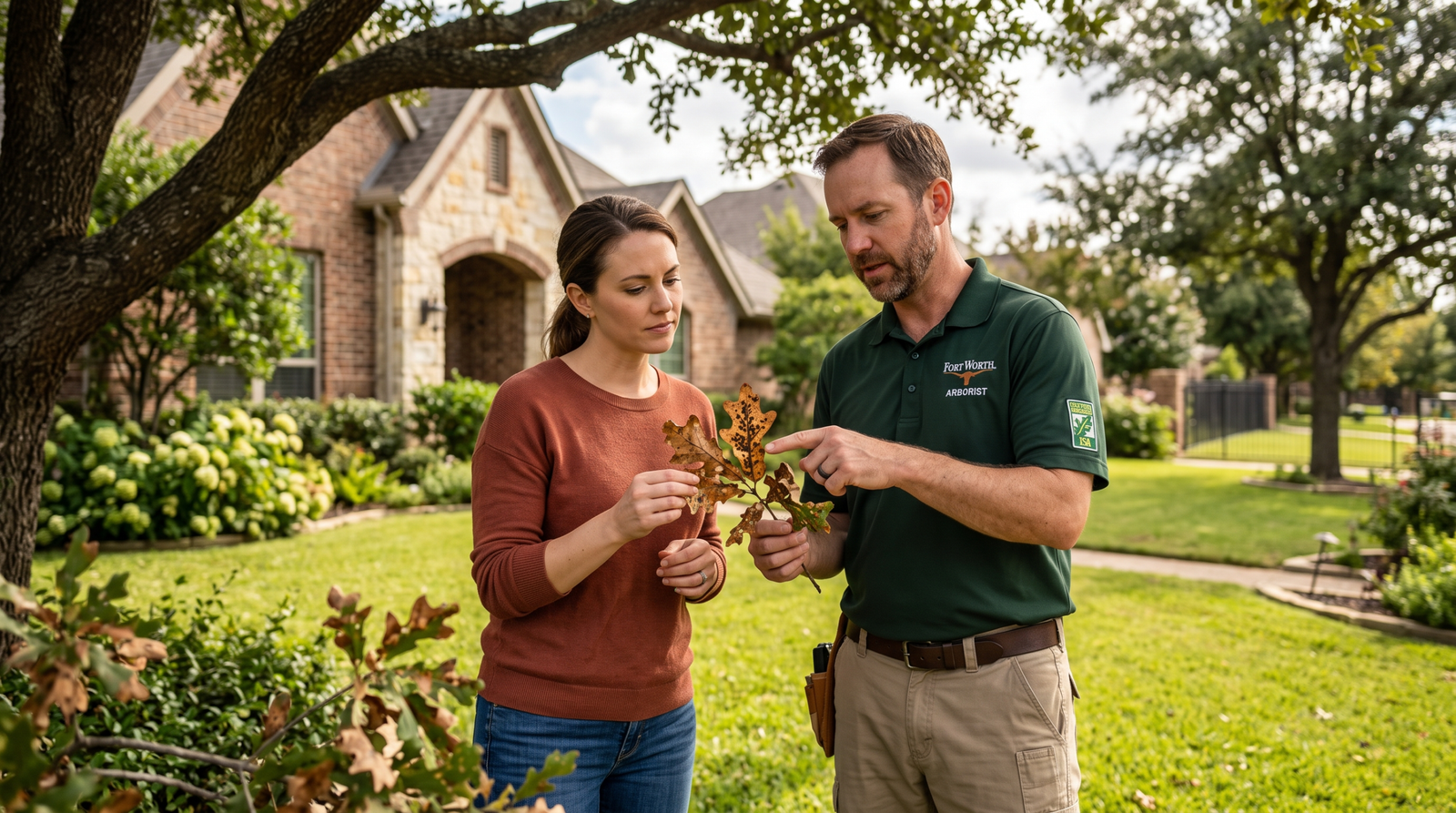
Keeping Your Trees and Shrubs Thriving Year-Round
Not every visit starts with a problem. Many of ours start with a homeowner who wants to keep a beautiful, established landscape looking its best through a hot Texas summer or a surprise freeze. We feed what our heavy clay soil naturally locks away, building the kind of resilience that means less stress when the weather turns hard — because a mature tree can add up to 15% to your home’s value.
Whether you’re protecting a tree that’s been in the family for decades, or managing several properties as a landscaper, developer, or HOA, the principle’s the same: a little attention now beats an expensive problem later.
Tree & Shrub Care in Fort Worth: Frequently Asked Questions
Why call a plant health specialist instead of a regular tree cutting crew?
A cutting crew looks at a struggling tree and sees a removal job. We see a patient. Most of what looks fatal from the outside — thinning leaves, yellowing, even bark damage — is treatable when it’s caught in time.
Can a tree with Oak Wilt actually be saved?
Often, yes — especially caught before the infection spreads far through the root system. There’s no single “cure,” but fast, correct treatment can stop the spread and keep the tree healthy for years.
What is crepe myrtle bark scale, and is it dangerous?
It’s a small insect that coats the bark in a white, waxy film, often followed by black sooty mold. It won’t kill a healthy tree overnight, but left untreated for a few seasons, it weakens the tree and ruins its appearance. Very treatable if caught early.
I'm not sure what's wrong — I just know my tree or shrub doesn't look right.
That’s exactly the kind of call we often work with — and we’re ready for yours. You don’t need to know the name of the problem — that’s our job. One visit gives you a clear answer. Want to look into it yourself first? Try our Symptom Guide, or if you’ve already been told it needs to come down, get a second opinion before you decide.
Let's Find Out What's Really Going On
- You don't have to guess, and you don't have to assume the worst. A quick call today can mean the difference between saving a tree you love and losing it to a "wait and see" that went too long.
Prefer to talk it through first? Call +18170000000 — speak directly with your local Certified Arborist.
Prefer to talk it through first? Call +18170000000— speak directly with your local Certified Arborist.